
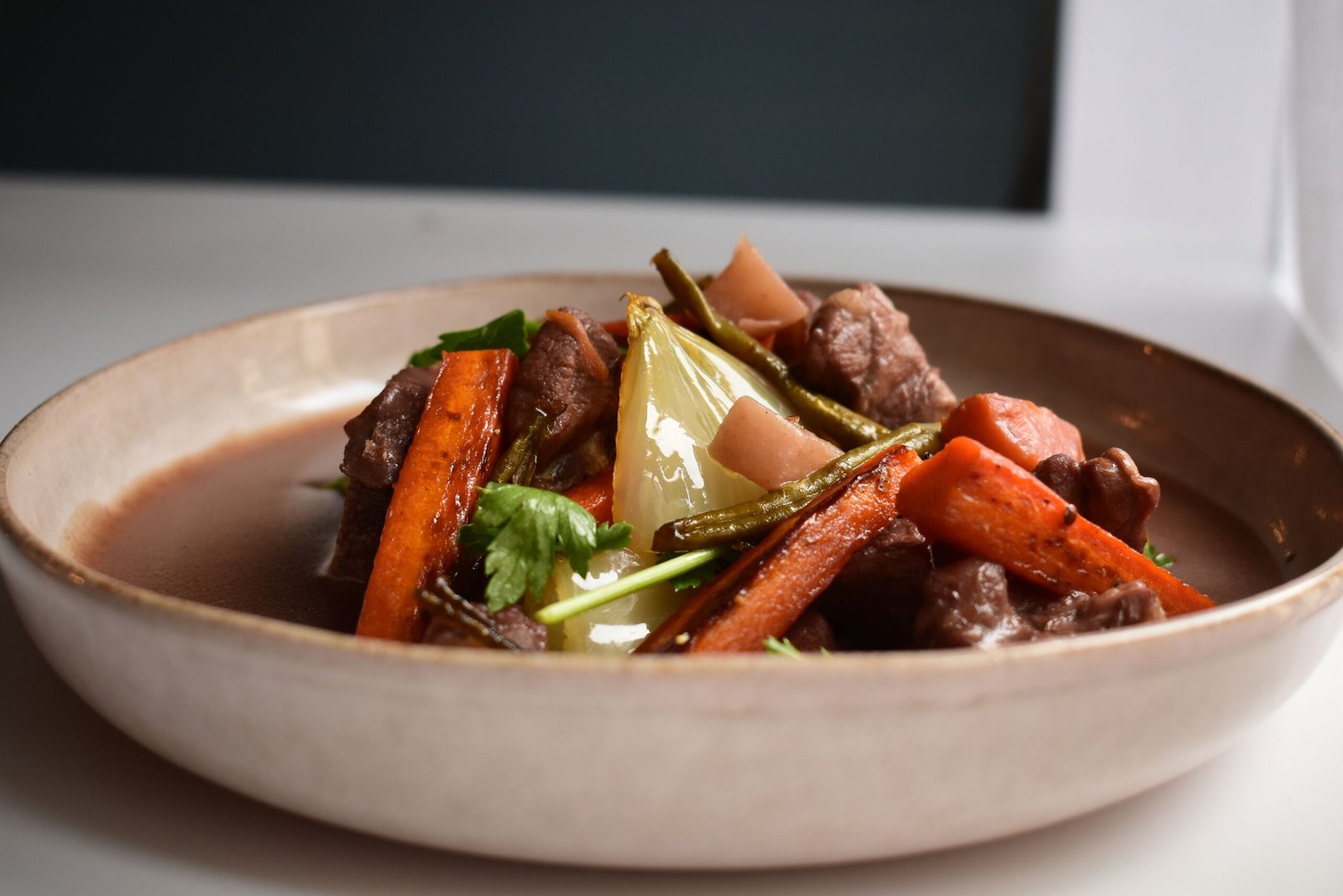
Boeuf bourguignon is one of France’s most recognizable comfort foods, combining tender beef, red wine, vegetables, herbs, mushrooms, onions, and bacon into a deeply flavored stew. Originating from Burgundy, or Bourgogne, this dish represents the region’s long relationship with wine, local produce, and hearty home cooking. The name simply means “beef from Burgundy,” and the recipe has become popular far beyond its French roots.
What makes boeuf bourguignon special is not complicated seasoning or elaborate presentation. Its character comes from patient cooking. Beef is browned to develop flavor, vegetables are gently cooked, and red wine becomes part of the rich sauce as the dish slowly simmers. Traditional versions can vary considerably, but the essential idea remains the same: take simple ingredients and give them enough time to become something deeply satisfying.
What Is Boeuf Bourguignon?
Boeuf bourguignon is a French beef stew traditionally associated with Burgundy. The dish typically uses a tougher cut of beef that becomes tender during slow cooking. Red wine is a defining ingredient, while onions, carrots, garlic, herbs, bacon or lardons, and mushrooms commonly contribute additional flavor and texture.
The dish is often cooked in a heavy casserole or Dutch oven. The beef is browned first, which creates the savory browned bits that later become part of the sauce. The meat is then cooked gently with wine and aromatic ingredients until it becomes tender enough to cut easily with a fork.
France’s official tourism site describes boeuf bourguignon as one of the most popular dishes in France and identifies Burgundy red wine as a central component of its traditional sauce. It also highlights the familiar combination of beef, onions, garlic, mushrooms, carrots, lardons, and bouquet garni.
Although the dish has an elegant French name, its roots are firmly connected to practical cooking. Tougher cuts of beef can become wonderfully tender when given enough time at a gentle temperature. This is one reason boeuf bourguignon remains so appealing for home cooks.
The dish is also flexible. Recipes differ in the type of beef used, the quantity of wine, the cooking time, and whether ingredients such as tomato paste or stock are included. Some recipes marinate the beef overnight, while others move directly from browning to braising.
The History and Burgundy Connection
Boeuf bourguignon is strongly connected to Burgundy, a French region famous for its food and wine. Wine has an important role in Burgundy’s culinary traditions, and many regional dishes use wine as an ingredient or accompaniment. France’s tourism authority specifically describes Burgundy cuisine as closely connected with its wines and includes beef bourguignon among its characteristic wine-based dishes.
Historically, dishes like this were practical ways to transform less tender pieces of meat into satisfying meals. Slow cooking allowed connective tissue in tougher cuts to break down gradually. The result was a stew with soft meat and a concentrated sauce.
Over time, boeuf bourguignon moved from regional and home-style cooking into the wider French culinary tradition. It became familiar to international audiences through French cookbooks and chefs. Its popularity was also helped by the fact that the basic technique is accessible to home cooks even though the finished dish can taste sophisticated.
There is no single recipe that defines every authentic version. A cook in Burgundy may prepare the dish differently from a restaurant chef in Paris or a home cook elsewhere in the world. The essential elements are the relationship between beef, red wine, aromatics, and slow cooking.
That flexibility is part of the dish’s appeal. You can make a relatively simple version with beef, wine, carrots, onions, herbs, and mushrooms, or create a more elaborate preparation with carefully prepared garnishes and a long cooking process.
Key Ingredients for a Great Boeuf Bourguignon
The quality of the ingredients has a noticeable effect on the finished stew. You do not need rare or expensive ingredients, but choosing appropriate cuts and allowing enough time for cooking makes a major difference.
Beef: Choose a cut suitable for slow cooking. Beef chuck, braising steak, shin, and similar cuts can work well because they contain connective tissue and fat that contribute to tenderness and flavor during long cooking. BBC Good Food, for example, uses braising steak in its version of the dish.
Red wine: Wine provides much of the characteristic flavor of boeuf bourguignon. Burgundy is traditionally associated with the dish, and Pinot Noir is a natural regional choice. A dry red wine with good acidity generally works better than a very sweet wine.
Bacon or lardons: These add salt, savory depth, and richness. They can be browned before the beef or cooked separately and incorporated toward the end.
Carrots and onions: These form an important aromatic foundation. They add sweetness and balance to the wine and beef.
Mushrooms: Mushrooms bring an earthy flavor and pleasant texture. Many recipes cook them separately before adding them to the finished stew so they retain more of their character.
Pearl onions or shallots: These provide sweetness and visual appeal. They are especially good when lightly caramelized before being added.
Garlic: Garlic contributes another savory layer without overpowering the wine and beef.
Herbs: A bouquet garni containing herbs such as thyme and bay leaf is commonly used. These herbs add fragrance while allowing the beef and wine to remain the dominant flavors.
Flour: Some recipes use flour to help thicken the sauce. Other methods rely on reduction to create a naturally concentrated gravy.
France’s published Burgundy recipe includes beef chuck, red wine, carrots, onion, garlic, bouquet garni, bacon, mushrooms, and small onions, demonstrating how these ingredients work together in a traditional-style preparation.
How to Make Boeuf Bourguignon at Home
Making boeuf bourguignon takes time, but the process is straightforward when divided into stages. The most important principle is to avoid rushing the browning and braising stages.
1. Prepare the Beef
Cut the beef into large, evenly sized pieces. Pat the pieces dry before browning because excess moisture can prevent good caramelization.
Season the beef with salt and pepper. If you are using a recipe that calls for overnight marination, place the beef in red wine with herbs and aromatics and refrigerate it before cooking. BBC Good Food notes that marinating can allow wine and herbs to penetrate the meat and add complexity, although it is not absolutely necessary for a successful dish.
2. Brown the Beef
Heat a heavy pan or Dutch oven and add a little oil. Brown the beef in batches rather than overcrowding the pan.
This step matters. Proper browning creates flavorful caramelized surfaces that contribute greatly to the final sauce. If too much beef is added at once, the pan temperature can drop and the meat may steam instead of brown.
Once browned, transfer the beef to a plate.
3. Cook the Aromatics
Add the onions and carrots to the same pan. Cook them until they begin to soften and develop color. Garlic can be added shortly afterward.
If there are browned bits stuck to the bottom of the pan, the wine will help loosen them. Those browned pieces contain concentrated flavor and should not simply be discarded.
4. Add the Wine and Herbs
Return the beef to the pot and add the red wine. Add your bouquet garni and other chosen seasonings.
The liquid should surround the beef without necessarily drowning it completely. Bring the mixture gently toward a simmer rather than allowing it to boil aggressively.
Some recipes use wine almost exclusively for the cooking liquid, while others combine wine with stock. Both approaches can produce excellent results. BBC Good Food’s version emphasizes red wine, while the France tourism recipe combines wine and veal stock.
5. Cook Slowly
Cover the pot and transfer it to a moderate oven or keep it on a very low stovetop setting. The goal is gentle, consistent cooking.
Cooking time varies depending on the cut, size of the beef pieces, and cooking temperature. Some recipes take around two hours, while others use substantially longer cooking times. A chef recipe published by France.fr recommends a much longer six-hour simmer for its particular preparation.
The beef is ready when it is very tender but still holds its shape.
6. Prepare the Garnish
Bacon, mushrooms, and pearl onions are often prepared separately. Browning them independently allows each ingredient to develop its own flavor.
This is particularly useful for mushrooms. Adding them too early can cause them to become soft and lose their texture. Cooking them separately and adding them later gives the finished stew more contrast.
7. Finish the Sauce
Once the beef is tender, taste the sauce. Depending on the recipe and amount of liquid, you may need to reduce it slightly to achieve a richer consistency.
Remove the bouquet garni and adjust the seasoning. Return the cooked garnish to the pot or arrange it over individual servings.
The final sauce should be rich and flavorful without becoming excessively thick. The beef should be the star, surrounded by a glossy wine-based sauce.
What to Serve With Boeuf Bourguignon
Boeuf bourguignon is naturally rich, so the best side dishes are those that complement the sauce without competing with it.
Mashed potatoes: Creamy mashed potatoes are one of the easiest choices because they absorb the wine-rich sauce beautifully.
Crusty bread: A rustic loaf is ideal for soaking up every last spoonful of gravy. This is especially useful when you want a simple meal without preparing another elaborate side.
Boiled potatoes: Small potatoes provide a clean, understated accompaniment.
Rice: Although less traditional in French presentation, plain rice can work well if you want a neutral base for the sauce.
Buttered noodles: Soft noodles can provide a comforting foundation for the stew.
Green vegetables: Green beans, peas, broccoli, or a simple green salad can bring freshness to the plate and balance the richness of the beef.
France’s Burgundy food guide specifically suggests serving boeuf bourguignon with mashed potatoes or gratin dauphinois.
When choosing a side, think about texture as much as flavor. The stew already provides tender beef and a rich sauce, so a slightly crisp or fresh component can make the meal feel more balanced.
Tips for Making Better Boeuf Bourguignon
The difference between an average beef stew and a memorable boeuf bourguignon often comes down to technique rather than expensive ingredients.
Do not skip browning. Take time to brown the beef properly. Work in batches if necessary.
Use a suitable beef cut. Very lean cuts can become dry during extended cooking. Cuts intended for braising generally perform better.
Avoid excessive heat. A gentle simmer is preferable to a violent boil. Slow cooking allows connective tissue to soften without aggressively drying the meat.
Choose a drinkable wine. You do not necessarily need an expensive Burgundy bottle, but extremely poor-quality wine can negatively affect the sauce. A dry red wine with pleasant acidity is a sensible choice.
Do not rush the vegetables. Properly cooked onions and carrots help create a deeper base.
Consider making it ahead. Slow-cooked stews often benefit from resting. BBC Good Food also recommends making certain versions ahead because the flavors can develop as the dish rests and is reheated.
Add mushrooms later. Cooking mushrooms separately helps preserve their texture.
Taste before serving. Wine, bacon, and stock can all contribute salt and intensity, so final seasoning should be adjusted only after the sauce has reduced.
Keep the sauce balanced. If it tastes too sharp, further cooking and reduction may help. If it becomes too concentrated, a small amount of appropriate liquid can bring it back into balance.
The goal is not simply to cook beef for a long time. It is to build layers of flavor at each stage.
Frequently Asked Questions About Boeuf Bourguignon
Is boeuf bourguignon the same as beef bourguignon?
Yes. “Boeuf bourguignon” is the French name, while “beef bourguignon” is the English name commonly used for the same dish.
What cut of beef is best for boeuf bourguignon?
Beef chuck, braising steak, shin, and other suitable slow-cooking cuts can work well. The important factor is choosing meat that can handle extended cooking and become tender over time.
Does boeuf bourguignon have to use Burgundy wine?
Traditional versions are strongly associated with Burgundy wine, but cooks outside Burgundy can use another dry red wine. The wine should complement the beef rather than overpower it.
Should beef bourguignon be marinated overnight?
An overnight marinade can add flavor and allow the wine and herbs to infuse the meat. However, it is not essential. BBC Good Food notes that slow cooking itself contributes significantly to tenderizing the meat and bringing the flavors together.
Why is my beef tough?
Usually, the meat needs more time. Tough cuts contain connective tissue that gradually softens during slow cooking. If the meat is still resistant after the expected cooking period, continue cooking gently and check it periodically.
Can boeuf bourguignon be frozen?
Yes. Many versions can be frozen successfully. BBC Good Food lists its beef bourguignon as freezable and provides instructions for cooling, freezing, thawing, and reheating.
Can I make boeuf bourguignon in a slow cooker?
Yes. Slow-cooker versions are widely used. One BBC Good Food recipe cooks the stew on low for approximately six to eight hours, with bacon, shallots, and mushrooms added near the end.
Is boeuf bourguignon difficult to make?
It is more time-consuming than technically difficult. The main skills are browning the beef properly, controlling the cooking temperature, and giving the stew enough time to become tender.
Final Thoughts on Boeuf Bourguignon
Boeuf bourguignon remains popular because it turns humble ingredients into a meal with remarkable depth. Beef, red wine, onions, carrots, herbs, mushrooms, and bacon may sound simple individually, but careful preparation and slow cooking allow them to develop into a rich and satisfying stew.
Its Burgundy heritage gives the dish a strong connection to French food and wine culture, while its straightforward cooking method makes it accessible to home cooks. France continues to present boeuf bourguignon as one of the region’s iconic dishes, and modern chefs still reinterpret the classic in their own ways.
For the best result, focus on the fundamentals. Choose a good braising cut, brown the meat well, use a flavorful dry red wine, cook the stew gently, and give the beef enough time to become tender. Prepare mushrooms and onions carefully, taste the sauce before serving, and pair the finished dish with something that can capture its rich gravy.
The beauty of boeuf bourguignon is that it does not require complicated equipment or fashionable ingredients. It rewards patience. Whether prepared for a quiet weekend dinner, a family gathering, or a special French-inspired meal, this classic stew offers the kind of deep, comforting flavor that makes people return to traditional recipes generation after generation.